Popular searches:Servo ultrasonic welding machine、Ultrasonic welding automation matching

7-day free trial welding with
no reason for return or exchange

Independent research and development
and production of the entire industry chain

Global pioneer of ultrasonic
servo welding technology

1-year warranty
worry free after-sales service

800+product selection, diverse
and comprehensive categories

Provide professional technical
training and full cycle maintenance
Headquarters Address: No.3 Pingxi Wu Road Nanping Technology Industrial Park,Xiangzhou District,Zhuhai Guangdong China
Monday to Friday - 9:00 AM to 6:00 PM
Feel free to fill out our contact form below and our support team will get back to you within 24 hours.
When choosing different frequency models, the first step is to clarify the application requirements, including prediction targets, data properties, and required accuracy. Next, collect and analyze data to understand its distribution, patterns, and characteristics. Afterwards, compare different frequency models such as ARIMA, SARIMA, etc., and select the appropriate model based on data characteristics. At the same time, the complexity of the model and computational resources should be considered. After selecting the model, train it using historical data and verify its accuracy. Regularly evaluate model performance, adjust parameters or switch to other models based on actual conditions. In short, choosing the appropriate frequency model requires considering various factors such as application background, data characteristics, and computing resources, and making a decision comprehensively.
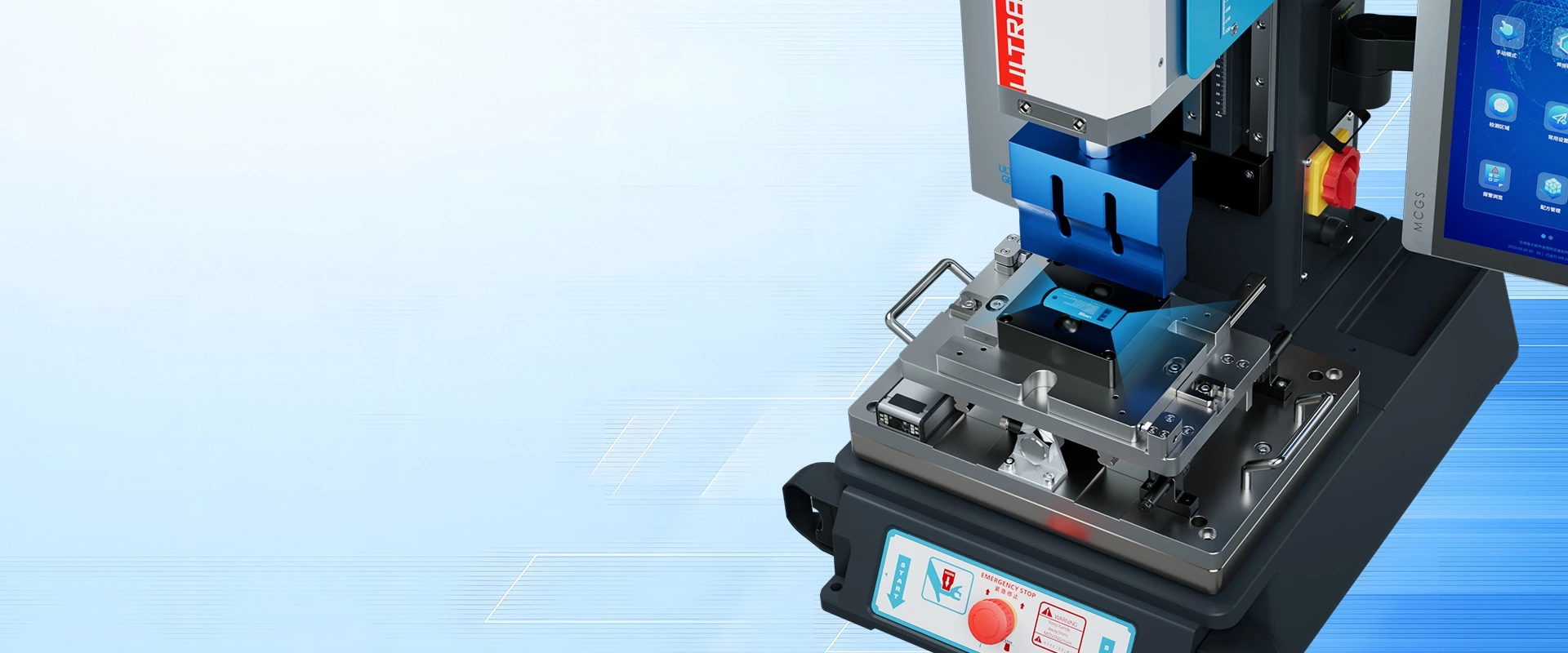
The principle of ultrasonic welding is to use high-frequency vibration energy to locally melt the material on the contact surface, and then apply pressure to achieve connection. Specifically, ultrasonic waves are applied to the surface of the welded object with a certain pressure through the welding head. Due to vibration and friction, heat is generated, which reduces the molecular distance at the interface of the welded object and achieves intermolecular bonding. This process has the advantages of being fast, efficient, and clean. Ultrasonic welding is suitable for connecting thermoplastic materials and is widely used in plastic manufacturing, electronics, automotive and other fields. The core lies in mastering the appropriate vibration frequency, amplitude, and welding time to ensure welding quality and efficiency.
Ultrasonic welding technology has many targeted advantages in various industrial fields. In the medical field, it can accurately weld small components and improve the quality of medical equipment. In the automotive industry, this technology has improved welding efficiency and achieved high-precision connections. In the electronics industry, ultrasonic welding ensures the stability and reliability of welding points, improving product quality. In addition, it can also handle the welding of thermoplastic materials, reduce costs, and is widely used in the packaging and plastic products industries. In summary, ultrasonic welding technology has the advantages of high efficiency, precision, and reliability, which can improve production efficiency and product quality in various industrial fields.
Ultrasonic welding technology is suitable for various plastic materials, but to achieve the best welding effect, some specific plastic materials are more suitable. For example, polyolefin materials such as polypropylene (PP), polyethylene (PE), and polyamide (PA, such as nylon) exhibit good response to ultrasonic welding. These materials have good weldability and thermoplasticity, and can achieve strong intermolecular bonding under the heat generated by ultrasonic vibration.
In addition, engineering plastics such as PC, PTFE, and PVC can also be welded using ultrasonic waves under appropriate process conditions. The welding effect of different materials may vary due to factors such as material properties, crystallinity, additives, etc. Therefore, experiments need to be conducted in practical applications to determine the optimal welding conditions.
We use cookies to collect information about how you use this site. We use this information to make the website work as well as possible and improve our services.more details